
Poker learning & community
Learn the game. Play your best. Rise.
Clear, practical poker strategy for recreational players and aspiring tournament regulars — from your first starting-hand decisions to your first final table.
Strategy that holds up
Starting hands, position, reading opponents and the mental game, explained without jargon and without shortcuts.
Tournament know-how
What actually happens at a live event, how blinds and stacks interact, and the basics of ICM in plain English.
Healthy habits
Bankroll management, tilt control and responsible play — the foundations that keep poker fun.
A glossary that helps
Over forty poker terms defined simply, so table talk and strategy articles make sense.
Start learning
Strategy guides
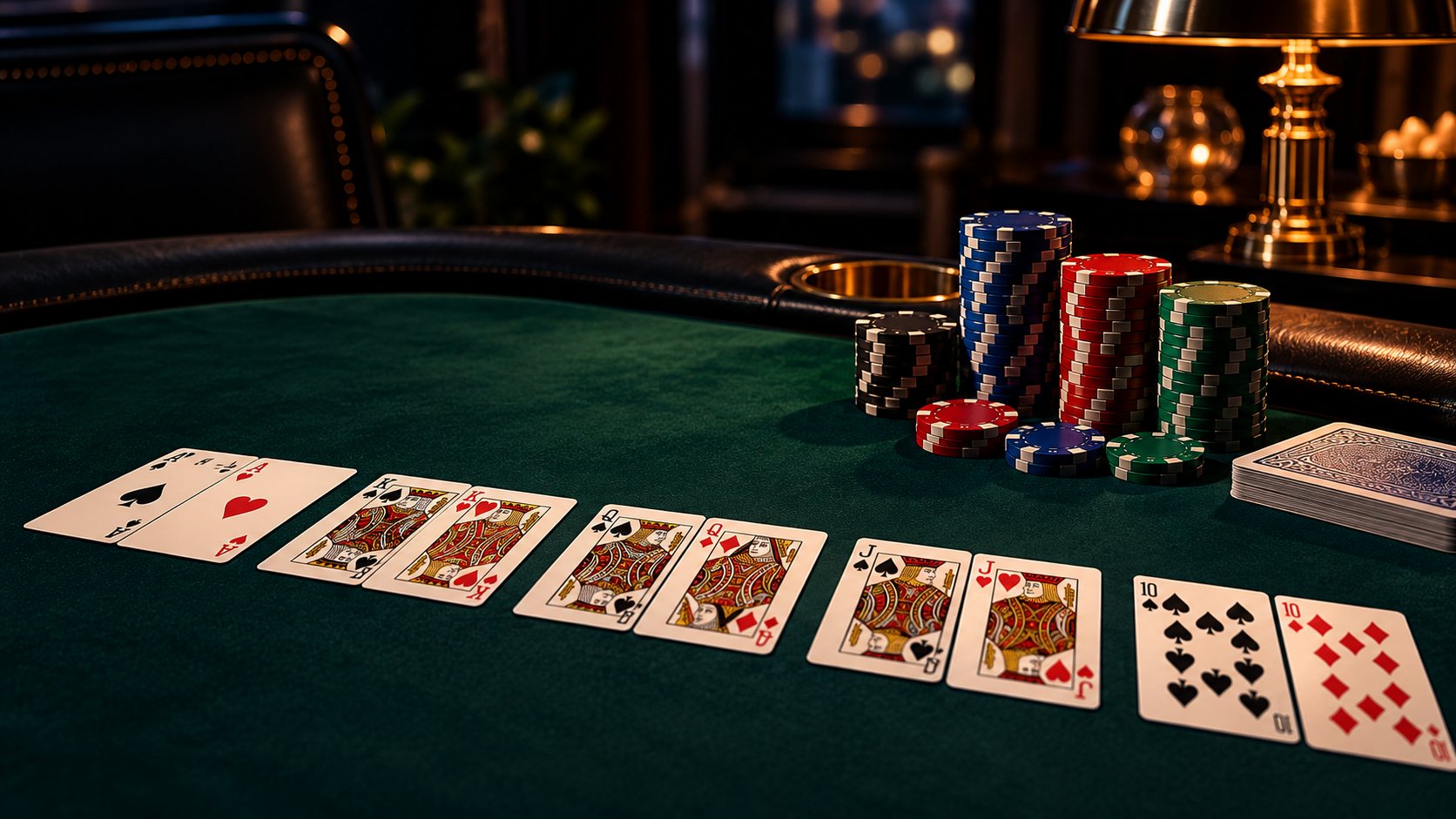 Starting hand selection and positionWhich hands to play, and why your seat changes everything.
- Bankroll managementBuy-in rules of thumb, variance, and when to move down.
- Tilt: recognizing it and staying in controlSpot the warning signs before they cost you.
 Reading opponentsWhy betting patterns tell you more than twitches.

Six keys to better poker
Cards change every hand. These habits don't. They are the foundation every rising player builds on.
- 01
Stay disciplined, keep studying
Good poker is a habit, not a hot streak. Play the hands and stakes you planned to play, and set aside time away from the table to review hands and learn something new each week.
- 02
Handle adversity
Every player goes through losing stretches. Stay motivated when you're down by focusing on the quality of your decisions rather than the last result, and treat a bad run as information, not a judgment.
- 03
Manage your money
Know your limits before you sit down. Keep your poker money separate, play stakes your bankroll can support, and treat the game with the seriousness of a small business.
- 04
Control your emotions — and read others'
Composure protects your stack and hides your intentions. At the same time, watch how opponents react under pressure; their emotions leak information yours shouldn't.
- 05
Understand your surroundings
Read the table early. In the first orbits, note who plays many hands, who only bets with strength and who is on edge. A quick picture of the table shapes every decision that follows.
- 06
Expand your knowledge
The best players stay curious. Ask questions of players you respect, talk through difficult hands, and be willing to change your mind when a better idea comes along.
Independent and ad-free. We don't accept sponsored content or gambling affiliate deals, and nothing here promises winnings. Poker is a game of skill and chance; play for enjoyment and within your limits.